Automotive Cable Manufacturer for Thin-Wall Vehicle Wiring Harnesses
Thin-wall automotive primary wires with fine-stranded bare-copper conductors and oil- and abrasion-resistant PVC or cross-linked (XLPE) insulation, rated 60V DC and built to ISO 6722 and LV112 — engineered to save space and weight in dense wiring harnesses and to hold their dimensions the same from the first metre to the last.
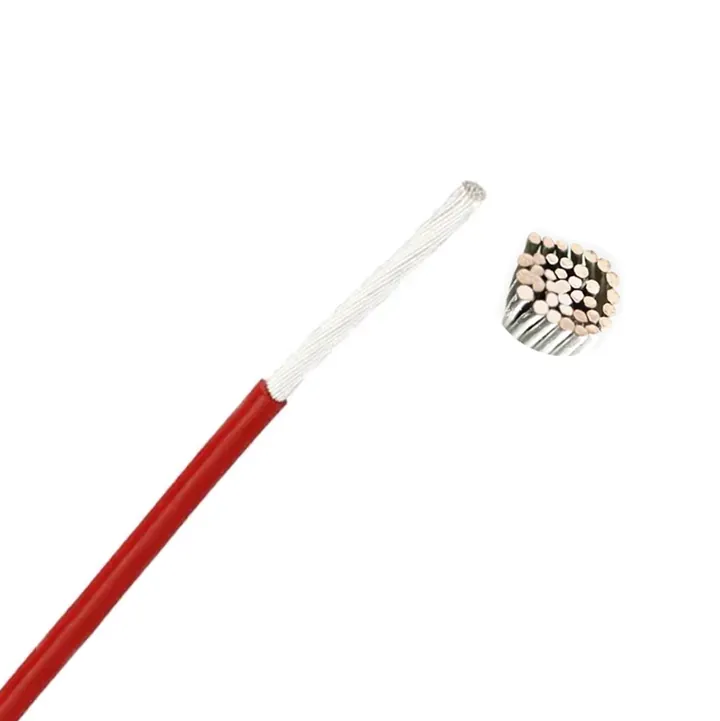 Thin-wall FLRY primary wire · fine-stranded bare copper · PVC / cross-linked XLPE insulation · multi-colour harness stock
Automotive Wire Construction — Thin-Wall Insulation, Fine-Stranded Copper, FLRY and FLY Types
A modern vehicle carries thousands of individual wires, and every one of them competes for the same tight body channels and adds to the same kerb weight. That is why an automotive wire is built the opposite way to an industrial power cable — not thick insulation to stand off high voltage, but the thinnest wall that still holds up at 60V, on a conductor made to bend into place. This section explains why it is built that way; the full ratings sit in the table below.
-
Thin-wall insulation (FLRY-B)
At a low 60V working voltage the insulation no longer has to be thick to stand off the circuit, so a high-grade PVC can hold the dielectric in a much thinner wall. A thinner wall means a smaller overall diameter and less material per metre, which is what lets a dense harness stay inside its channels and takes weight out of the finished car — the reverse of a power cable, which wants a thick wall to carry voltage.
-
Fine-stranded bare copper (IEC 60228 Class 5)
The conductor is laid up from many fine copper strands rather than a few thick ones, so the wire is flexible enough to be routed by hand through narrow body cavities and around brackets, and springy enough to ride out the car's constant vibration without a strand fatiguing. This is a routing-and-vibration flexibility, not the repeated dynamic bending a trailing rubber cable is built for.
-
PVC (thin-wall) vs cross-linked XLPE (FLR2X)
General body wiring uses thin-wall PVC; runs into the engine bay and other hot zones step up to cross-linked XLPE, which lifts the temperature class without adding wall. The insulation compound is chosen by the temperature zone the wire runs in.
-
Oil- & abrasion-resistant compound
The insulation is compounded to shrug off the oil mist and the constant rub of a chassis or engine-bay route, so it does not swell soft or chafe through to a short over the life of the vehicle.
Automotive Cable Types, Wall Class and Temperature Grade — FLRY-A, FLRY-B, FLY and FLR2X
Match the wall class and the temperature grade to where the wire runs — thin-wall to save space and weight, a higher temperature grade for hot zones. Every figure here is a recognised automotive standard, not a private specification, and this table is the one place the full ratings are set out.
Common construction: All types use fine-stranded bare-copper conductors (IEC 60228 Class 5), rated 60V DC, oil- and abrasion-resistant, built to ISO 6722, ISO 19642, LV112 and DIN 72551.
Automotive-Grade Endurance and Batch-to-Batch Consistency
A vehicle wire has to do two things a bench sample never proves. It has to survive years in a hot, oily, vibrating car, and — because a single vehicle carries thousands of them — every metre has to be identical to the last so a harness plant can terminate millions of joints without a bad one. This is how the wire earns the word automotive-grade.
-
Temperature endurance
The insulation is graded to the zone it runs in, from -40 up to +105°C on PVC and +125°C on cross-linked XLPE, so a wire routed past the engine bay does not go hard and crack where a general-purpose insulation would. The temperature grade is matched to the route, to the classes written into ISO 6722.
-
Oil & abrasion resistance
The compound is built to resist the oil mist and the constant chafe of an under-body or engine-bay route, so it does not swell soft or wear through to a short over the service life of the vehicle. Exposure endurance is a material choice, made at the compound.
-
Vibration endurance
The fine-stranded Class 5 conductor rides out the car's continuous vibration without a strand fatiguing and failing, where a solid or coarse-stranded conductor would work-harden and break. This is an endurance against constant low-amplitude shake, distinct from the repeated dynamic flexing a trailing cable is built for.
-
Batch & dimensional consistency
This is the mechanism unique to a harness wire. A single car needs thousands of these wires cut, stripped and crimped, so the outside diameter and the wall have to hold the same tolerance metre to metre and reel to reel. Tight, repeatable dimensions are what keep a harness plant's automatic crimp height consistent — so terminations hold their pull-out force — and what keep the finished vehicle electrically reliable. A cable measured in the millions of terminations lives or dies on this consistency, and a power, signal or charging cable is never asked for it.
-
Automotive compliance
We describe endurance and consistency from mechanism and from the grades written into ISO 6722, ISO 19642, LV112 and DIN 72551 — never an invented weight-saving percentage, wall thickness in millimetres, customer name or testimonial.
Where Our Automotive Cables Are Used — Vehicle Harnesses, Body Electrical and Automotive Electronics
Match the run to the type it needs, so the wire suits the space, temperature and route it actually sits in rather than a generic rating.
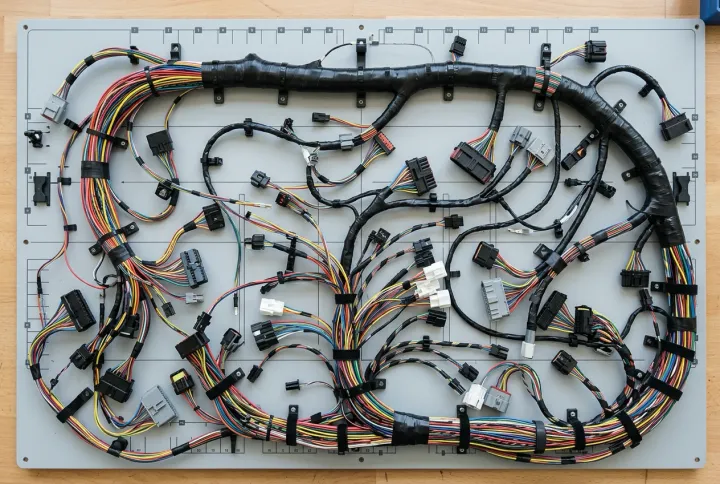
Vehicle Wiring Harnesses
High-density, multi-branch harness assemblies where thin-wall FLRY-B saves the space and weight the channels can't spare.
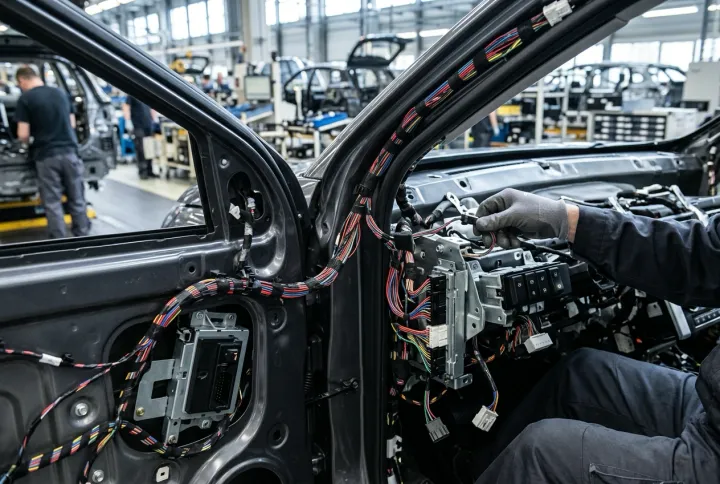
Body Electrical — Doors, Lighting, Dash
General body wiring in ordinary temperature zones, run in thin-wall PVC FLRY-A / FLRY-B.
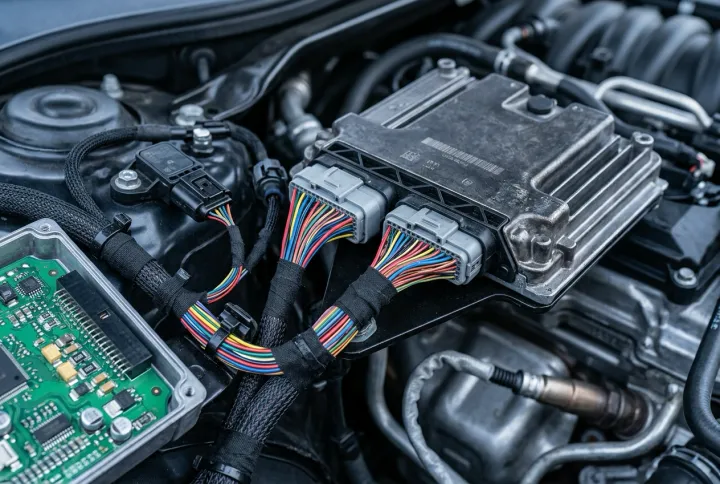
Automotive Electronics, ECU & Sensor Wiring
Fine control and signal tails to modules and sensors, run in small-cross-section thin-wall wire.
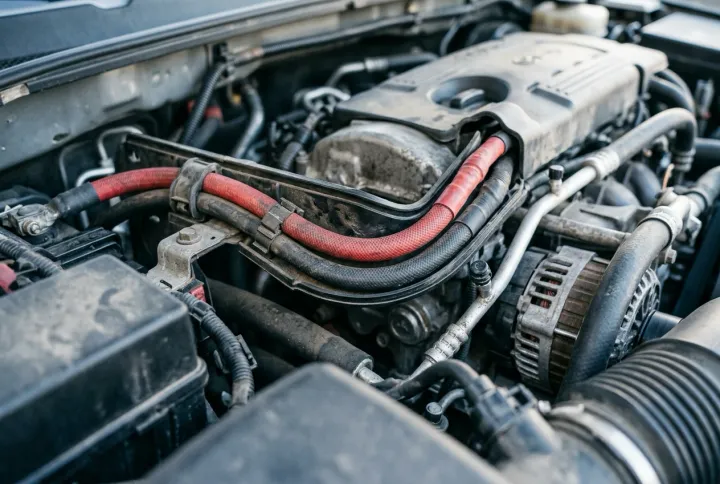
Battery, Starter & Engine-Bay Runs
Heavier gauges and hot-zone routes that step up to cross-linked XLPE (FLR2X) for temperature and oil resistance.
Why Source Automotive Cables From Yaxing
An automotive buyer approves a wire once and then has to receive it identical for the life of the model — thousands of metres a vehicle, tens of thousands of vehicles a year, every reel expected to strip and crimp exactly like the sample that was signed off. That is a question of scale and repeatability far more than of a good sample, which is why it counts that Yaxing has thirty years of automated production and the capacity to carry a program's volume, holds high-grade raw copper to one standard, tests every reel at 100% in a German-standard laboratory before dispatch, and carries the full certification set — CE, UL, TÜV, SAA, RoHS, IEC and ISO 9001, with third-party reports on request. It is the same discipline that has sustained Yaxing as a long-term State Grid supplier.
See the full factory, quality system and certification record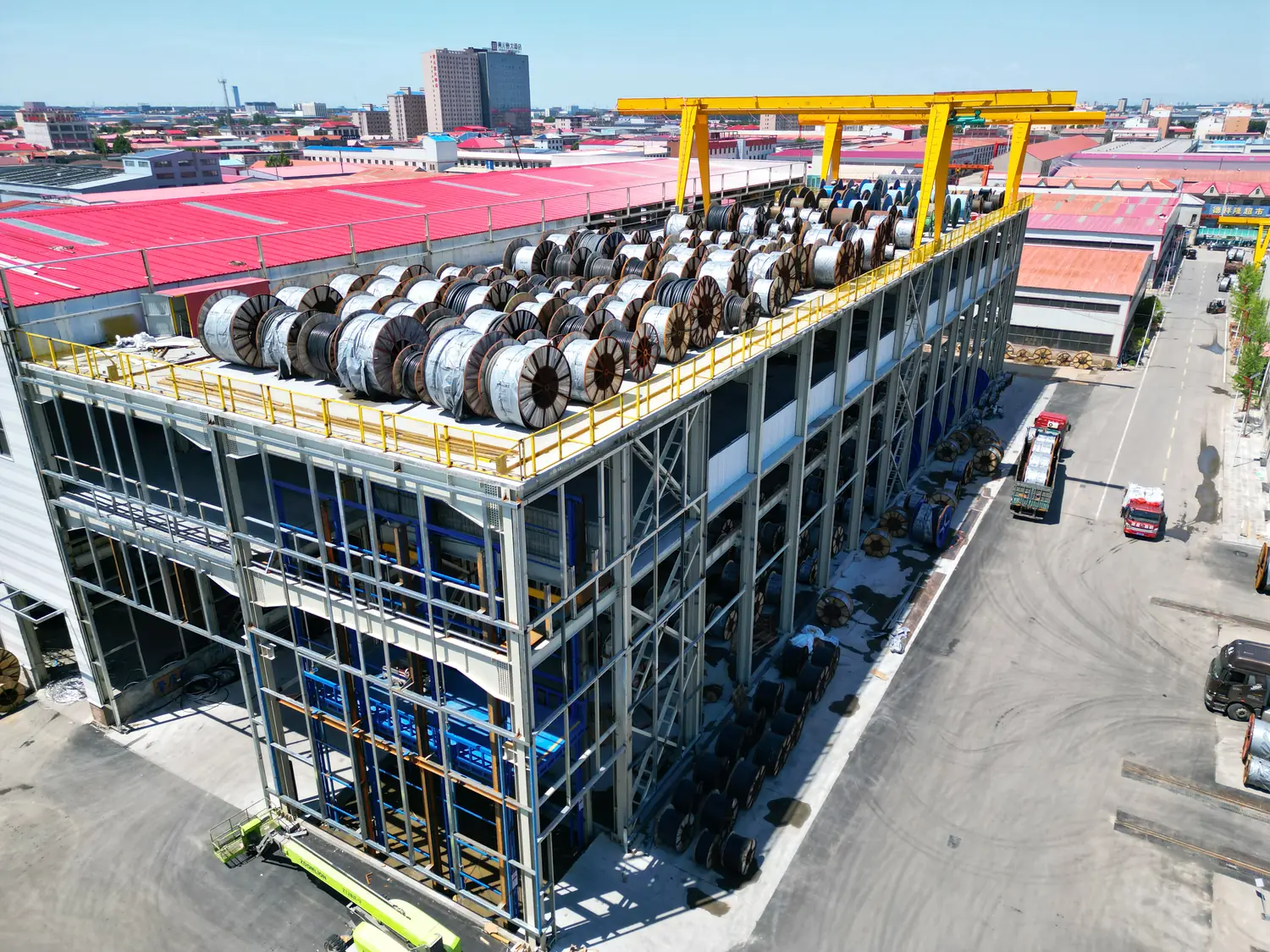 Ten automated lines · 100,000 m² base
OEM and Custom Automotive Cables
Most of what makes an automotive wire specifically yours is not its gauge but its colours, its print and the temperature grade its route needs — the small things that let a reel drop straight onto your crimp line and terminate without a second look. Send us the harness program and we build to it, from the type and wall class down to the metre marking, kitted and reeled the way your line takes delivery.
- Type & wall classFLRY-A, FLRY-B, FLY or FLR2X, in the wall class your packaging and weight target allow.
- Conductor cross-section & fine-strandingSized in mm² to the circuit current and the routing.
- Insulation & temperature gradeThin-wall PVC for general body wiring, cross-linked XLPE (FLR2X) for hot zones.
- Colour & surface printPair and circuit colours, colour codes and metre / surface marking to your OEM or Tier scheme.
- Cut length, reel & harness kittingCut lengths on reels or coils, kitted to your harness build.
- Packaging & labelOEM / ODM and private-label reels and cartons.
Automotive Cable MOQ From 500 Metres, 15 to 30 Day Lead Time
A harness program usually ramps in stages — a sample batch first to prove the crimp and the fit, then colour-by-colour volume once the build is signed off. The 500-metre minimum keeps that first validation batch small to order, and every run after it is scheduled to a confirmed date, so the wire is on the dock when the harness line is ready to draw it instead of holding up the ramp.
Specify
Type, wall class, cross-section, temperature grade, colour and quantity.
Confirm
Engineers verify structure, wall and temperature grade, and build slot.
Produce & test
Booked build window, 100% factory testing.
Dispatch
Kitted, reeled and shipped, customs handled together.
Request an Automotive Cable Quote
Send your type and wall class, conductor cross-section, insulation and temperature grade, colour or colour code, and quantity. Our engineers reply within 4 hours and return a full quote with datasheets within 24.
- Built to ISO 6722 / ISO 19642 / LV112 / DIN 72551 · FLRY-A/B · FLY · FLR2X
- Fine-stranded bare copper (Class 5) · thin-wall PVC or XLPE · oil- & abrasion-resistant · 60V DC
- MOQ from 500 m · 15–30 day lead time · 100% factory tested
- Reply within 4h · full quote & datasheets in 24h
Prefer to talk first? Email allen@newsun-cable.com or WhatsApp +86 188 7140 0481.