Electronic Wire Manufacturer for UL AWM Hook-Up and Internal Device Wiring
Electronic and hook-up wire that ships to a UL AWM type number, not just a gauge — fine stranded copper in a UL-typed PVC insulation, from general-purpose UL 1007 and UL 1015 to thin-wall and semi-rigid UL 1571 and UL 1061, so the type on your appliance's BOM drops straight into its own UL approval. Fine 18–30 AWG single cores for point-to-point internal wiring, in 300–600 V ratings, built to UL 758 (AWM), CSA, RoHS and REACH.
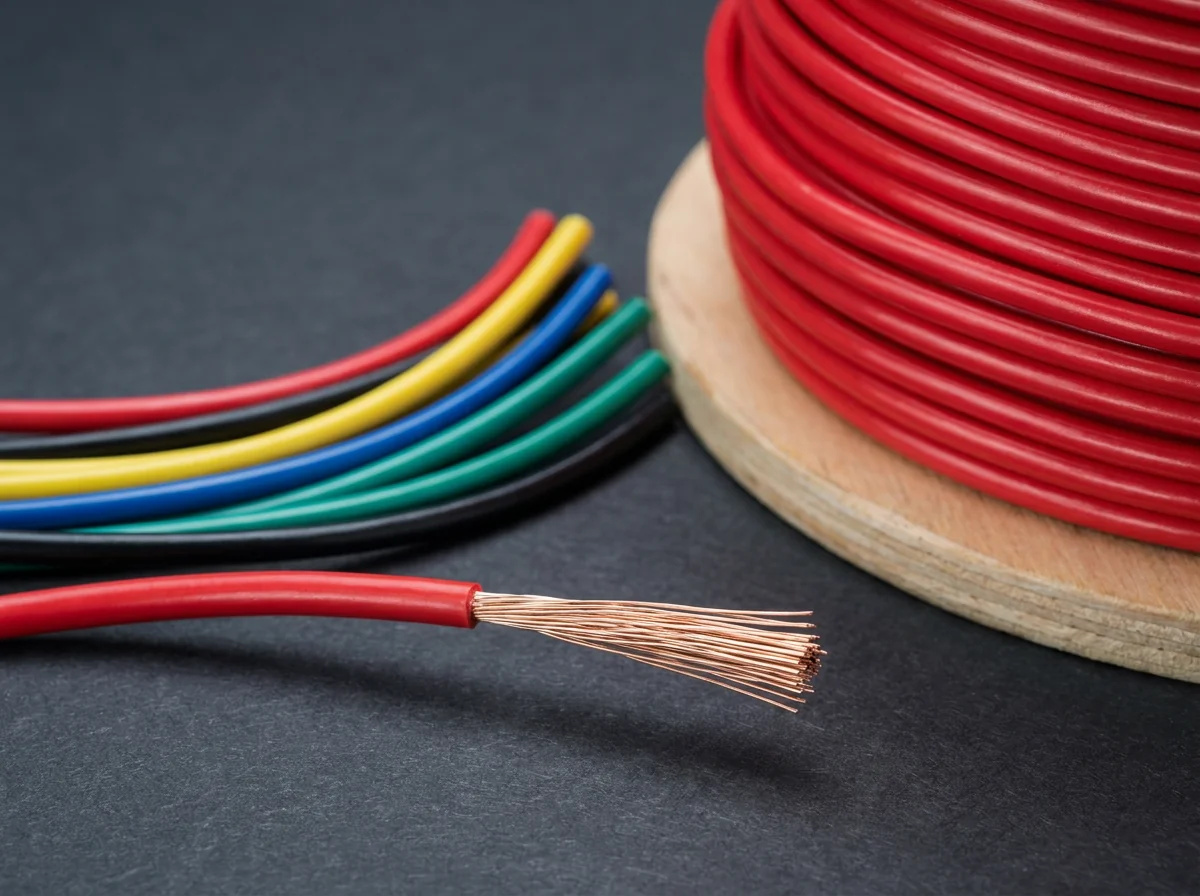 UL AWM hook-up wire · fine-stranded tinned copper · UL-typed PVC / semi-rigid PVC insulation · multi-colour reels
Electronic Hook-Up Wire Construction — Fine Stranded Copper in a UL-Typed PVC Insulation
On an electronics bill of materials, an internal wire is rarely written as "22 AWG PVC" — it is written as a UL AWM type number, and that number is the whole point. A UL type is a pre-tested combination of conductor, insulation, wall, temperature and voltage; the maker buys the type, not just a gauge. This section is about what that combination is made of and why a hook-up wire is a fine-stranded single core; how the type then clears an appliance's approval is the mechanism explained further down.
-
A fine-stranded copper conductor (tinned or bare)
The copper is stranded fine so the core stays soft enough to route through a crowded enclosure, across a PCB and into a terminal, and the tinned finish helps it crimp and solder without oxidising. It is a single core sized for internal routing and termination — not a load-bearing cross-section, not a shield drain, not a crimp conductor built for harness-scale volume.
-
A UL type-defined insulation
One UL AWM type number fixes one tested set of insulation compound, wall, temperature and voltage: general-purpose PVC on UL 1007 and UL 1015, thin-wall on UL 1571, semi-rigid PVC on UL 1061. The buyer orders by type, and the internal wire answers to that same type when the finished product is approved.
-
A PVC-family insulation (PVC / semi-rigid PVC / PE)
The same family covers different needs at different walls: general-purpose PVC, a semi-rigid PVC that stays thin and stiff enough to push into a connector, PE as an alternative — chosen by the internal voltage and the space the wire has to fit.
-
A single-core hook-up / lead architecture
The wire runs as one insulated core making a point-to-point connection inside the device (PCB to terminal, terminal to terminal). It is not laid up into a multi-core screened bundle and it is not fanned out into a vehicle harness — it is one core that takes one point to another inside the box.
Electronic Wire Types — UL 1007, UL 1015, UL 1571 and UL 1061 Hook-Up Wire, by Insulation, Voltage and Gauge
Start from the UL type your product's UL or CSA file calls for, then read across to insulation, voltage, temperature and gauge. Each row is a published UL AWM style, not a house grade — so the type you order is the type your approval was written against.
General-purpose internal hook-up wiring
General internal, power-supply and PCB-to-terminal leads
Tight-space fine-gauge consumer-electronics wiring
Thin-wall, stiff leads that push cleanly into connectors
Common construction: Every hook-up wire above uses fine stranded copper (tinned or bare) in a UL-typed PVC-family insulation — from general-purpose PVC (UL 1007 / UL 1015) to thin-wall and semi-rigid PVC (UL 1571 / UL 1061) — rated 300–600 V for internal device wiring and built to UL 758 (AWM), with CSA, RoHS and REACH.
UL AWM Approval, Solderability and Temperature Class
The table above is where you pick the type. This section is about what that UL AWM listing is actually worth once the wire is inside your product — why a recognised, listed component takes weight off your own UL or CSA file, why the tinned copper matters the moment it hits a solder pot or a crimp die, and how the temperature class has to match the heat the wire sits in. It is the value behind the listing, not the choice of it.
-
A
What a UL AWM listing is worth
A UL AWM style is a UL Recognized Component, not just a house grade — the construction was evaluated and listed to UL 758 (AWM) and carries that recognition on its own. For the buyer that recognition is portable: when the finished appliance goes for its UL or CSA evaluation, an already-listed internal wire is accepted as a recognised component rather than being re-tested from scratch, so the downstream product approval moves faster and the internal wiring is traceable back to a listed AWM style with third-party reports on request. The protection is not that you chose a type — it is that the type you chose already carries an approval your own certification can lean on. Where an automotive wire leans on ISO 6722 vehicle grades and an instrument cable on a BS 5308 screen class, a device wire leans on the UL AWM recognition system carried into the equipment's safety file.
-
B
Solderability — tinned copper that takes a joint
The copper is tinned for the assembly line, not just the datasheet. The tin coating lets the strands wet and take solder cleanly, and keeps the conductor from oxidising on the shelf and in service, so a joint made months after the reel was drawn still solders and crimps the same. On an automated insertion or crimp line that shows up as consistent, low-resistance terminations — fewer cold or dry joints, less rework, and connections that hold up over the product's service life. It is why a hook-up wire is specified tinned even where bare copper would carry the same current: the value is in how well it terminates, not only in what it conducts.
-
C
Matching the temperature class to the working heat
Every UL AWM style carries a standard temperature class, and the rule is to match that class to the hottest point the wire actually sees, not the average of the box. UL runs these classes in recognised steps — 80, 105, 125 and 150 °C. A general internal run sits comfortably at the 80 °C class (as on UL 1007); a lead running off a power supply or transformer wants the 105 °C class (as on UL 1015); a wire routed hard against a heatsink, motor or heater calls for a higher class again. Reading the working temperature at the wire — and specifying the class above it — is what keeps the insulation from ageing early where the heat is real. (80 / 105 °C are this page's PVC-family product anchors, firm; 125 / 150 °C are shown as UL's standard temperature-class steps for context — the higher-temperature silicone / FEP constructions that reach them sit outside this page's PVC-family scope.)
-
Stated in mechanism and recognised standard
All of it is stated in mechanism and recognised standard — UL 758 (AWM), CSA, RoHS and REACH — and never in an invented private voltage, gauge, UL file number, customer name or specific product case.
Where Our Electronic and Hook-Up Wires Are Used — Appliances, Power Supplies, Consumer Electronics and PCB Wiring
Map the run inside the box to the type it needs, so the UL type, insulation and voltage match the connection rather than a generic rating.
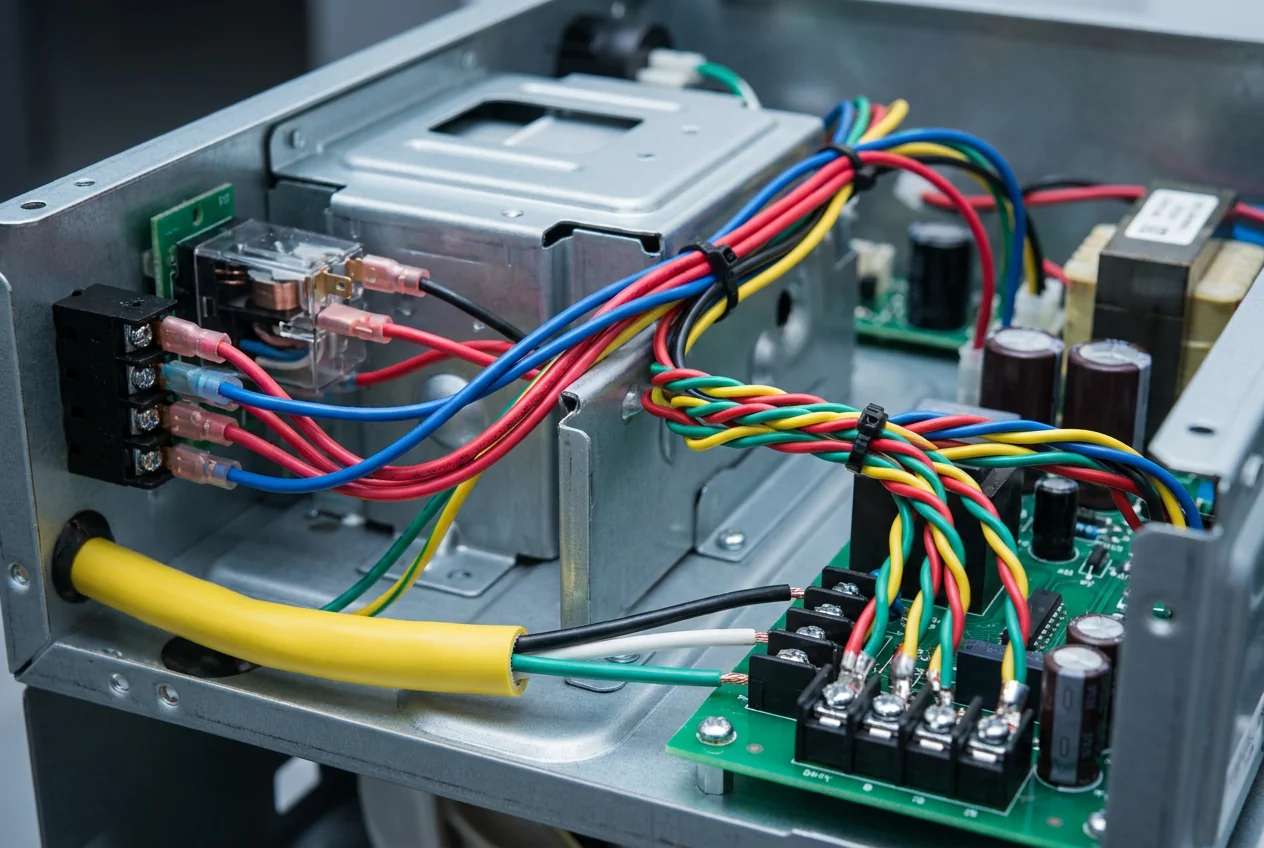
Appliance & Device Internal Wiring
Point-to-point connections and terminal wiring inside a home appliance or electrical device, in general-purpose PVC.
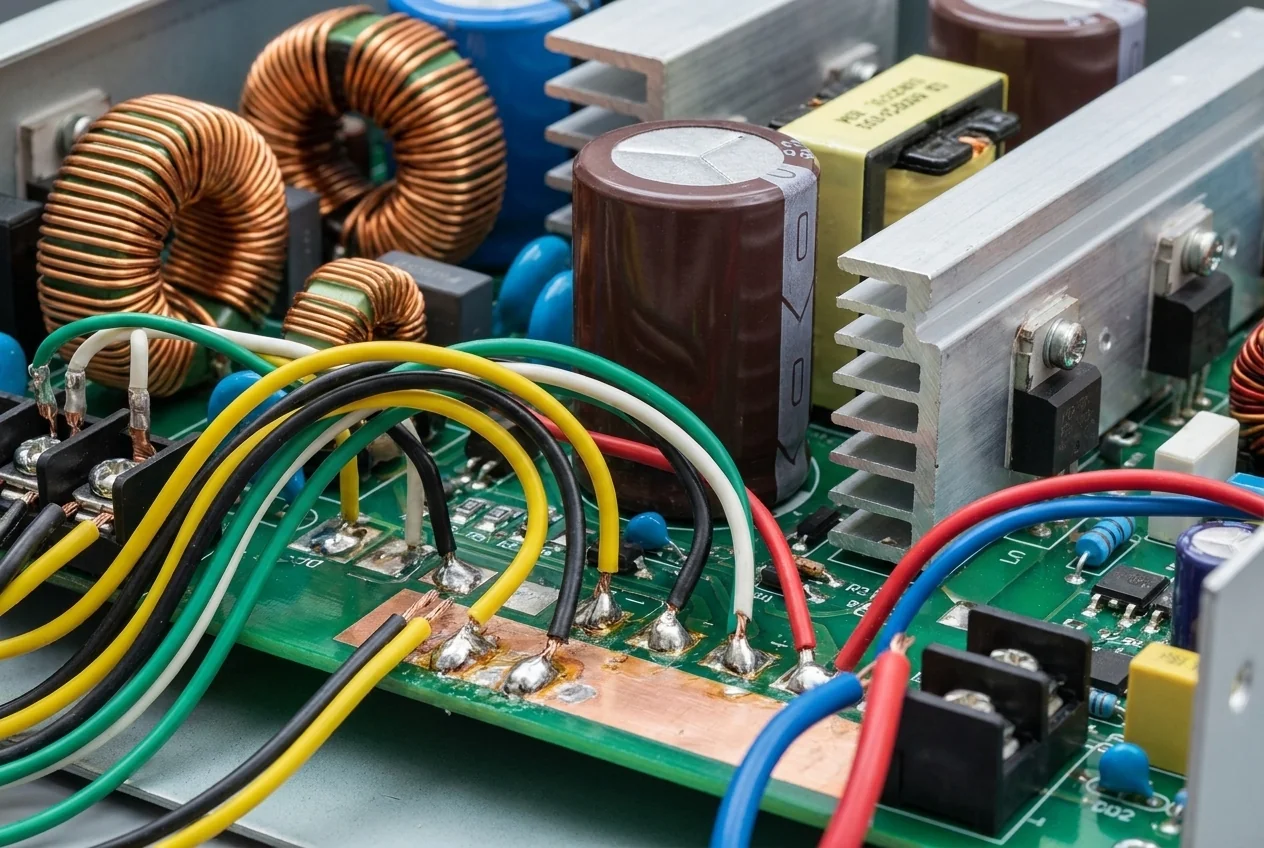
Power-Supply & PCB-to-Terminal Leads
Leads from a transformer, PSU or PCB out to a terminal, sized to the internal voltage.
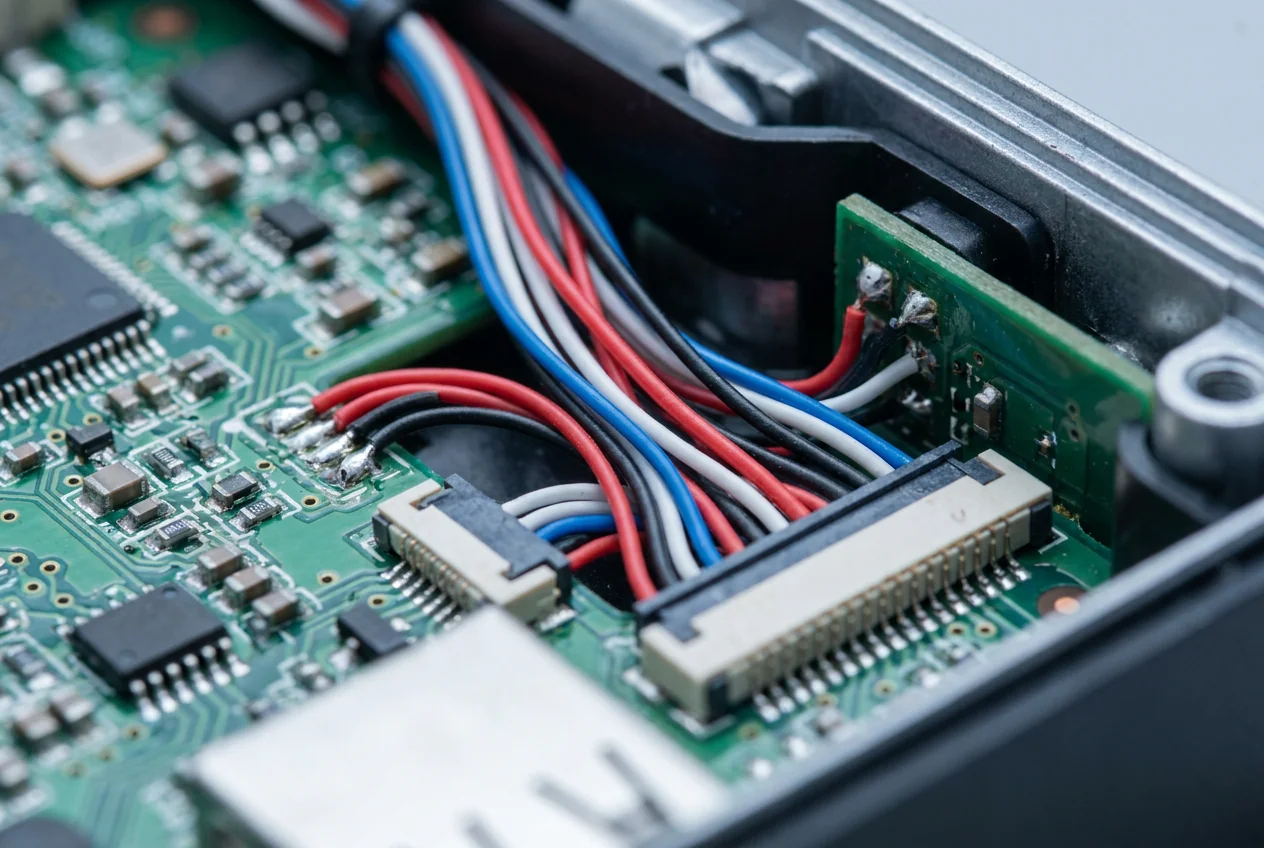
Consumer Electronics & Small-Appliance Internals
Tight-space fine-gauge runs that have to seat cleanly in a small housing.
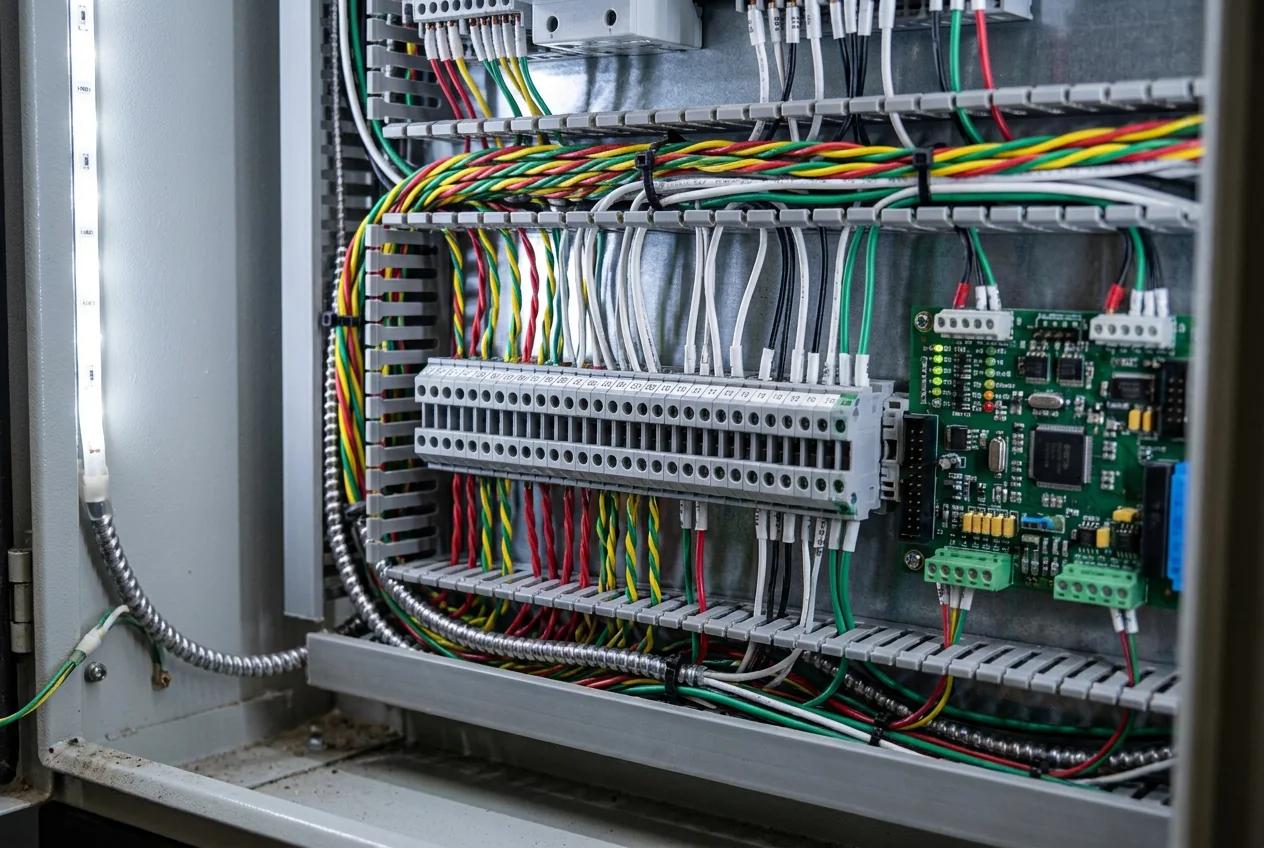
Instrument & Electronic-Module Internal Wiring
Point-to-point leads inside a panel or module, chosen by voltage and colour code.
Why Source Electronic and Hook-Up Wire From Yaxing
A reel of electronic wire is judged in one moment the buyer does not control — when the finished appliance goes in for its UL or CSA approval and the internal wiring has to answer to the exact type number on the BOM. At that point the type conformance, the insulation wall, the colour batch and the tinning are all read at once, and there is no fixing them after the enclosure is closed. That is why it counts that Yaxing is a self-owned source factory whose own UL-listed lines make what ships be the UL type the file was approved against — a long-term State Grid supplier across 30 years, certified to CE, UL, TÜV, SAA, RoHS, IEC and ISO 9001, running an in-house German-standard laboratory that tests 100% of production before dispatch, from a 100,000㎡, ten-line plant with third-party reports on request.
See the full factory, quality system and certification record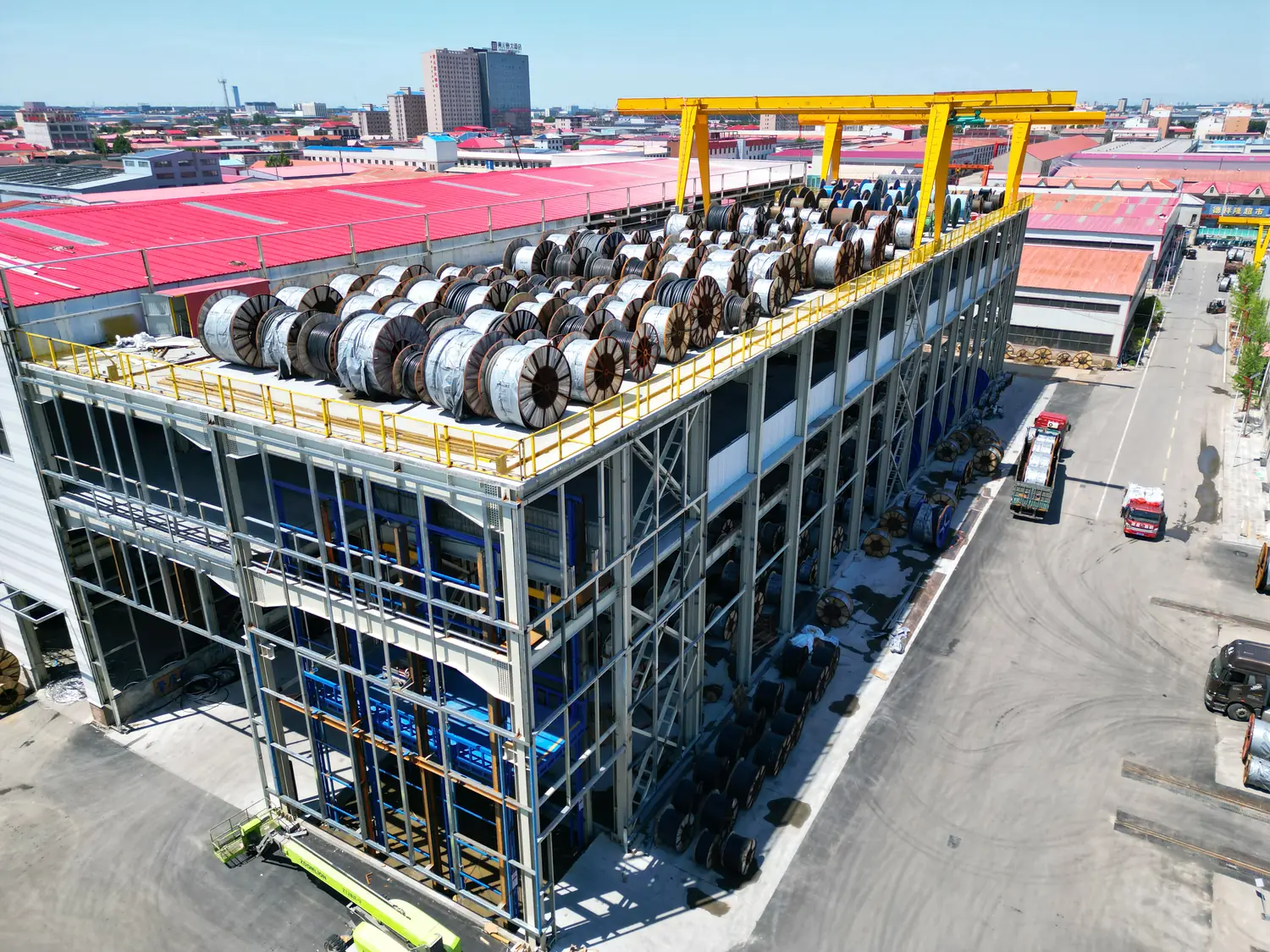 Ten automated lines · 100,000 m² base
OEM and Custom Electronic and Hook-Up Wire
What an electronics customer hands us is usually short — a UL type number, a colour and a gauge. We compound the insulation to that type, strand the conductor to the gauge, code the colour, print the surface and reel the wire the way your assembly line takes delivery, so a reel drops onto your insertion or crimp station and terminates without a second look. The list below is what you can set.
- UL type & insulationThe target UL AWM type number (UL 1007 / 1015 / 1571 / 1061), with the PVC-family compound and wall it defines.
- Conductor & tinningTinned or bare, and the fine stranded gauge (18–30 AWG), matched to how the ends are terminated or soldered.
- Voltage & wallThe type and wall chosen for the internal voltage (300 / 600 V) and the space in the housing.
- Colour & markingInsulation colour code, sequential metre marking, and surface print (type, gauge or private label) for line assembly and automated termination.
- Cut length, spooling & labelCut-to-length, spool or coil packing, and private-label OEM / ODM.
Electronic and Hook-Up Wire MOQ From 500 Metres, 15 to 30 Day Lead Time
A product's internal wiring gets ordered one part number at a time — a single UL type in one colour to prove the fit and the termination on the line first, then the multi-colour, multi-gauge volume once the build is locked. The 500-metre minimum keeps that first part number small to order, and every run after it — one trial reel or a model's worth of types and colours — is booked into a scheduled production window, so repeat reels land when your assembly line is actually drawing them.
Specify
UL type, insulation, conductor gauge, colour and quantity.
Confirm
Engineers verify the type and material and the build slot.
Produce & test
Booked build window, 100% factory testing.
Dispatch
Reeled and shipped, customs handled together.
Request an Electronic Wire Quote
Send the UL type number (or the voltage and insulation you need), the conductor gauge in AWG, tinned or bare, the colour and the quantity. Our engineers reply within 4 hours and return a full quote with datasheets within 24.
- Built to UL 758 (AWM) · CSA · RoHS · REACH · UL 1007 / 1015 / 1571 / 1061
- Fine stranded tinned or bare copper · PVC / semi-rigid PVC · 18–30 AWG · 300–600 V
- MOQ from 500 m · 15–30 day lead time · 100% factory tested
- Reply within 4h · full quote & datasheets in 24h
Prefer to talk first? Email allen@newsun-cable.com or WhatsApp +86 188 7140 0481.