Halogen-free photovoltaic cables with tinned-copper Class 5 conductors, engineered for a working life of outdoor UV, heat and weather on utility and rooftop solar.
Halogen-free XLPO · tinned-copper Class 5 · H1Z2Z2-K / PV1-F
Two material choices decide how long a PV cable lasts outdoors: the conductor metal and the insulation chemistry. This section explains why a photovoltaic cable is built the way it is, and which of the two type families to order — the full ratings sit in the table below.
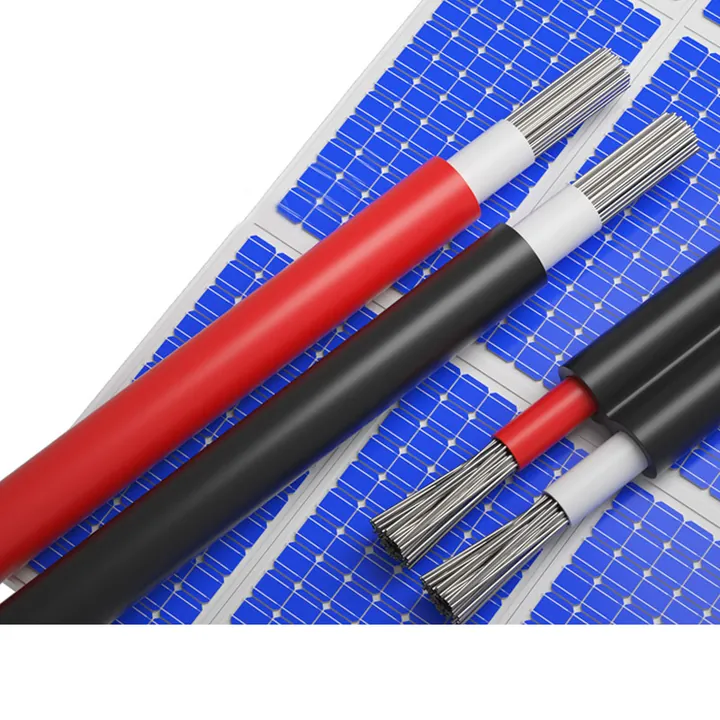
The copper is tin-coated because a solar cable carries current outdoors for its whole service life; the tin layer is an oxidation and corrosion barrier at cut ends and connector crimps, where a bare-copper cable would slowly green and lose contact. It is fine-stranded rather than solid so it stays flexible enough to route around module frames and pull through strings.
A PV cable uses it rather than PVC or XLPE because PVC hardens and cracks under years of sun and heat, while the cross-linked polyolefin stays flexible and stable under UV and high temperature. Halogen-free means low smoke and no corrosive gas if a fault ever burns.
An inner insulation plus a co-extruded outer sheath of the same cross-linked compound. The point is redundancy: the cable can be laid on tray or direct in the ground without conduit, and a nick or scrape in the sheath does not reach the conductor. This is the mechanism that lets a PV cable survive conduit-free installation.
The EN 50618 generation, today's European reference for new PV plants.
The earlier TÜV 2PfG 1169 generation, still specified on many installed and replacement systems.
Which one you order is driven by the market and the certification your project must present; the table below sets them side by side so the choice is one glance.
Match your target-market certification and your DC system voltage to the right type. Because a PV array is a DC system, every rating below is a DC rating — there is no AC-equivalent column to read across. Every figure here is a recognised international standard, not a private specification.
Common construction: All types share halogen-free XLPO insulation and sheath, rated -40°C to +90°C (120°C max), with double insulation for conduit-free laying and printed positive / negative identification.
A PV cable spends its entire life outdoors, so the question buyers actually ask is not what it is rated at, but how it keeps those ratings for decades. Here is the mechanism.
The cross-linked insulation resists photo-degradation, so a cable clipped to a module frame in full sun does not go brittle, chalk or crack the way an unrated PVC cable does within a few seasons.
Rooftops swing from freezing nights to blistering afternoons; the cross-linked structure holds its shape and dielectric strength through thousands of expansion-and-contraction cycles across its rated temperature band, without softening at the top or cracking at the bottom.
The halogen-free compound resists ozone, moisture and surface abrasion, which is what gives the conduit-free run its mechanical and weather redundancy over the life of the plant.
The 25-plus-year outdoor life PV buyers plan around is supported by the accelerated-aging regimes written into EN 50618 and TÜV 2PfG 1169, which age samples under UV, heat and voltage to prove endurance. We state 25+ years as a customer-reported field expectation backed by these standard accelerated-aging tests — not a private lifetime figure we invented.
Map your project type to the configuration it needs, so the cable matches how the array is actually wired rather than a generic datasheet.
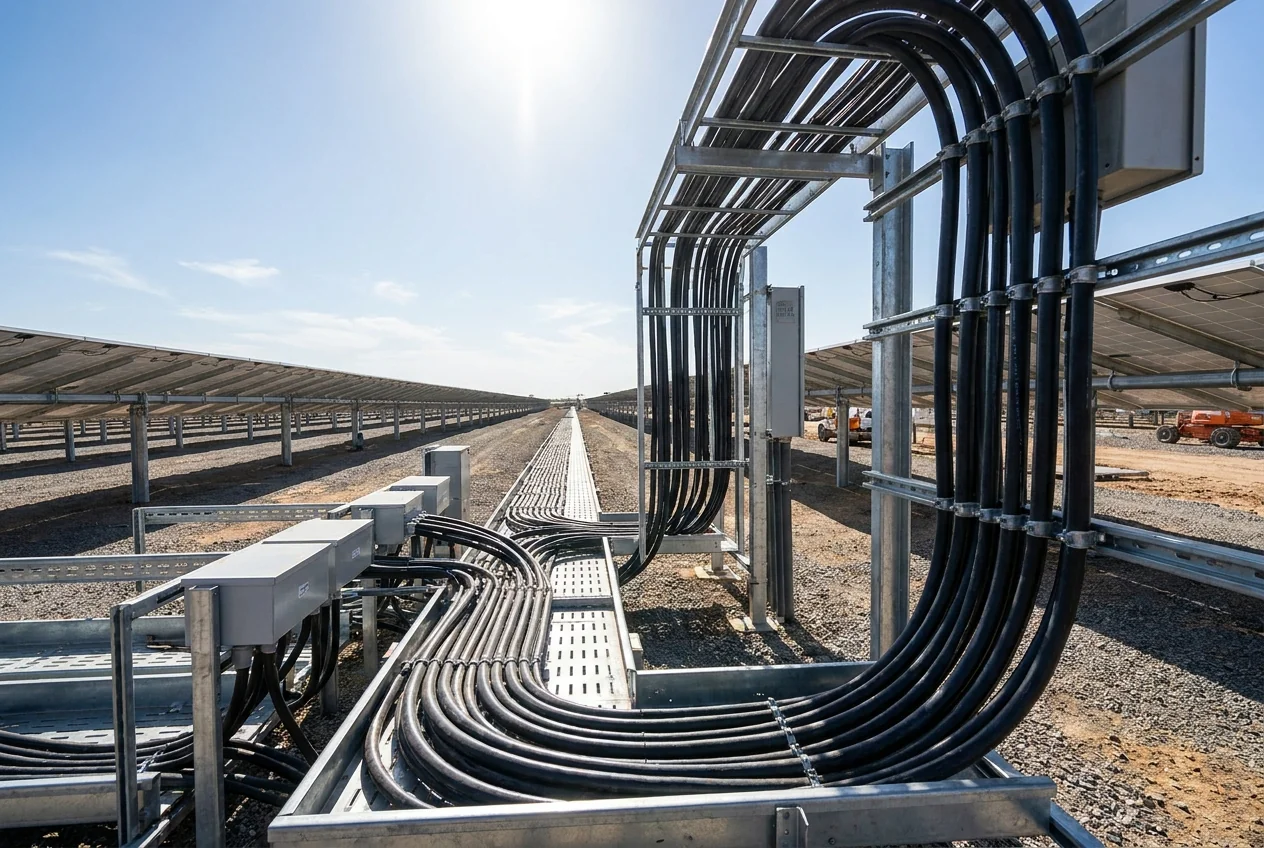
Long DC feeders and combiner runs, on tray or direct-buried, using the conduit-free cable for fast field pulling.
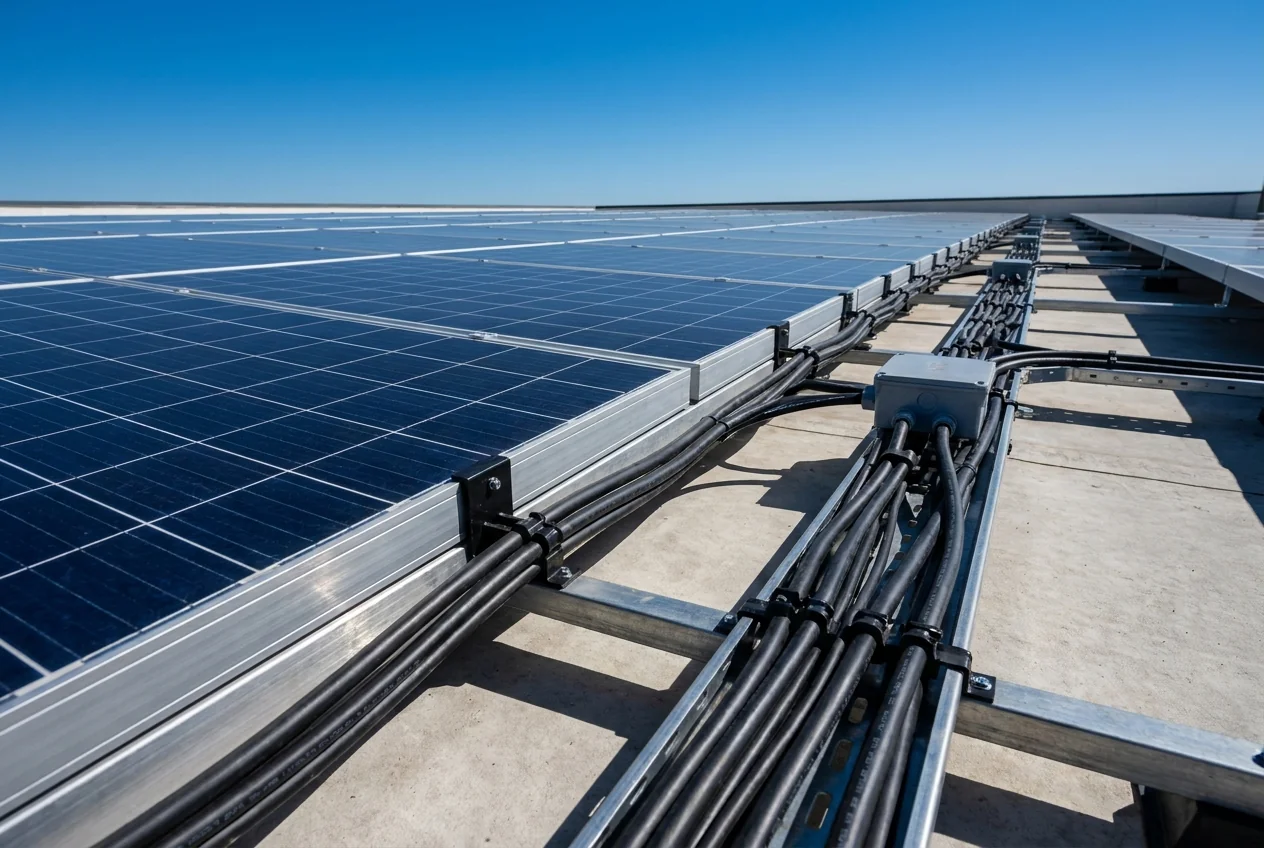
High-UV, high-temperature runs clipped to module frames, where flexibility and heat stability decide how the install ages.
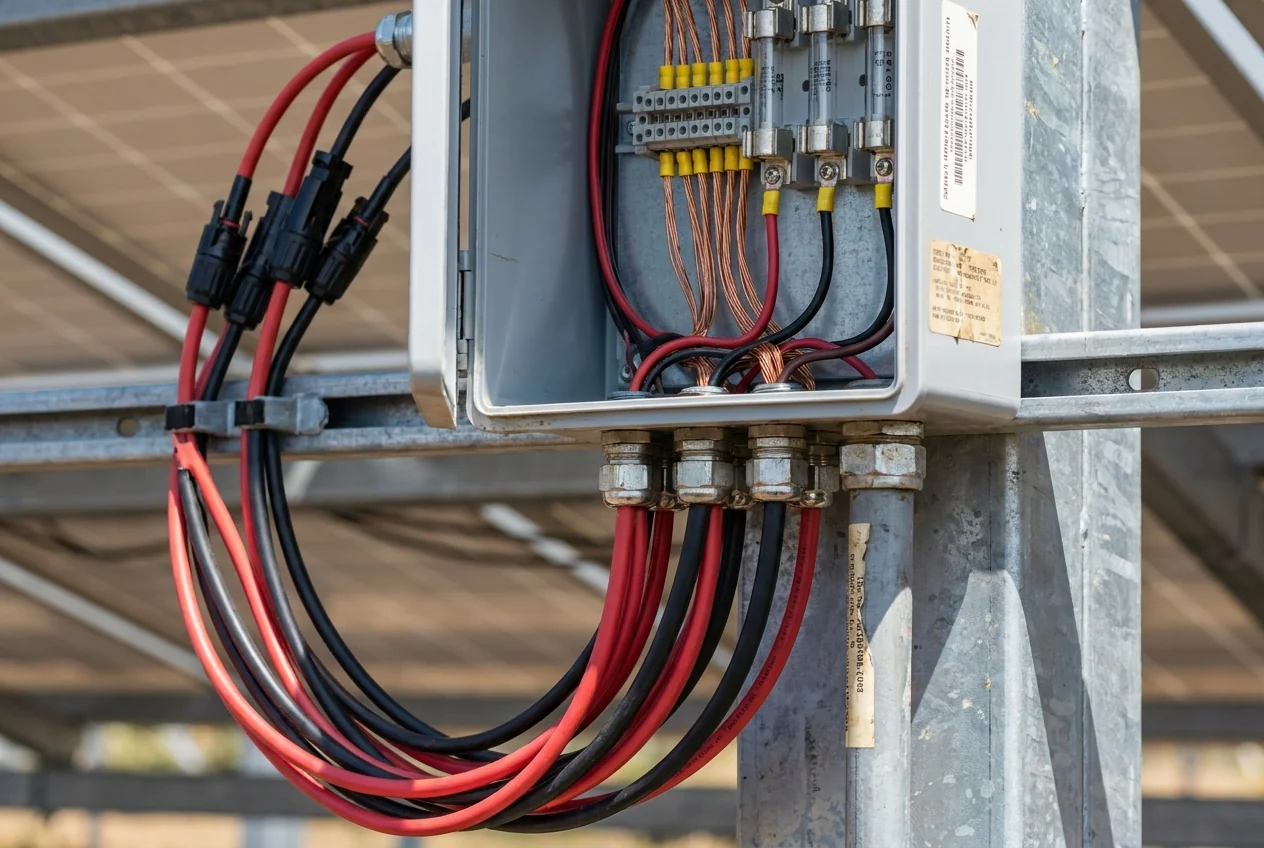
Fine-stranded flexible cable with red / black positive-negative identification for fast, error-free stringing.
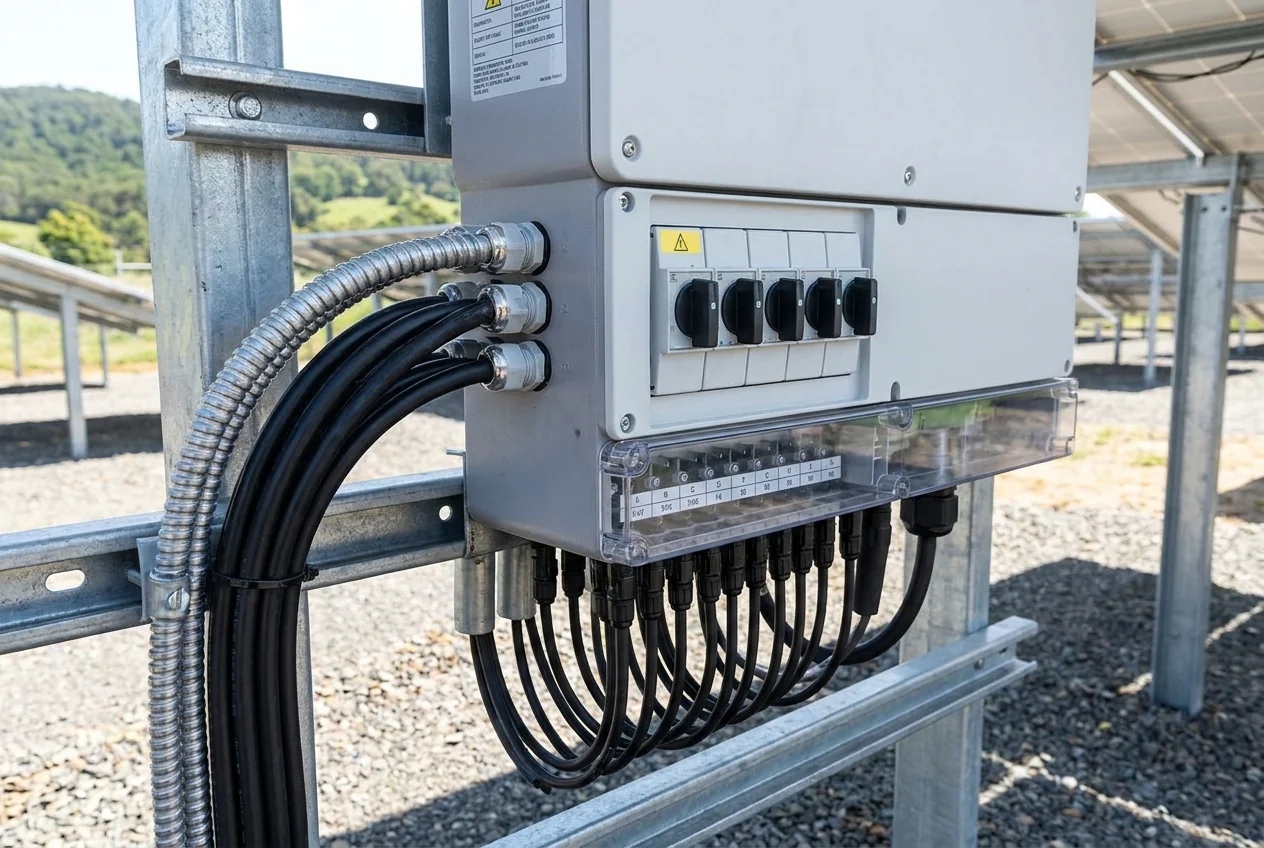
Matched to your DC system voltage from array through combiner to inverter input.
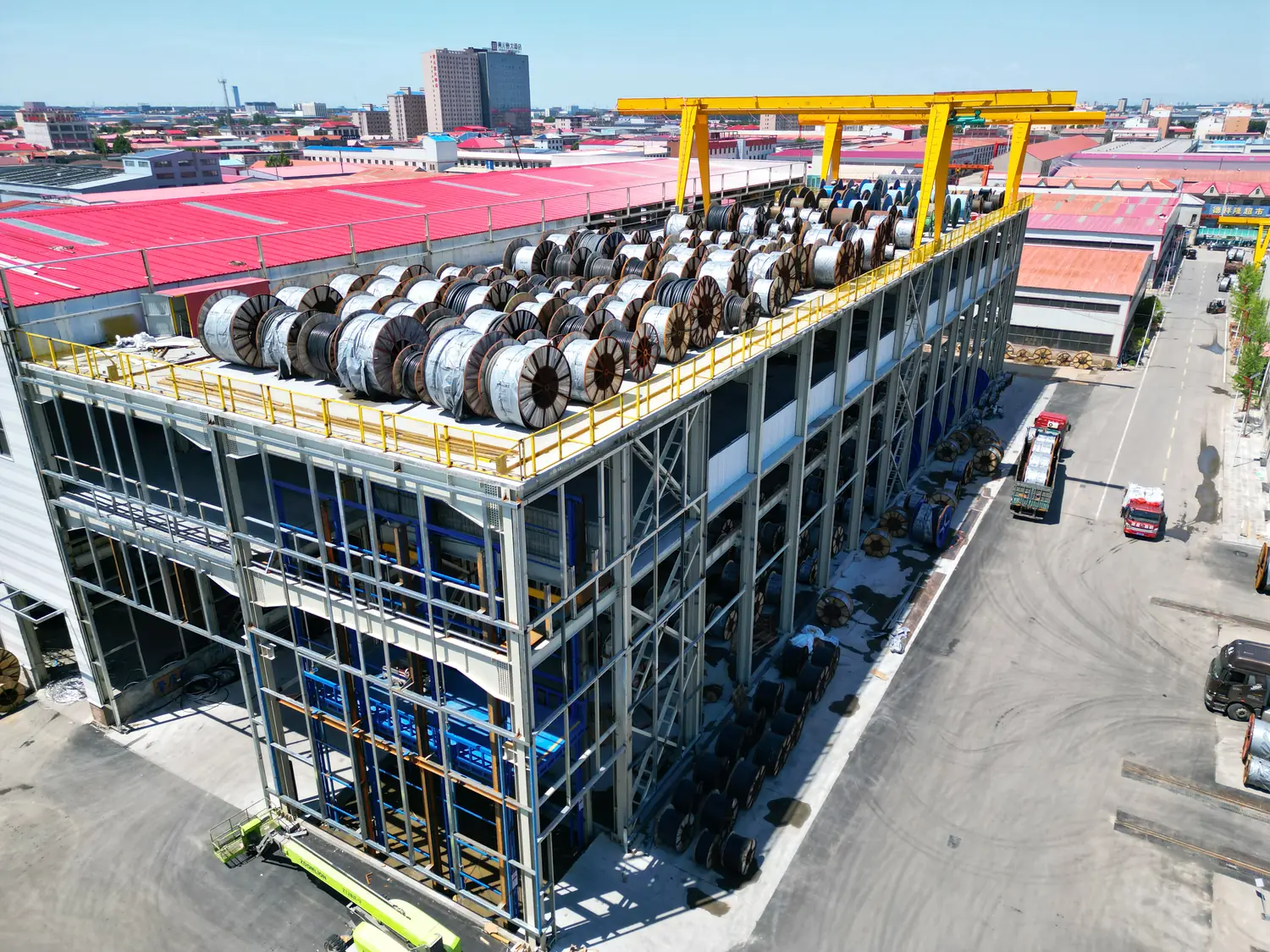
Every reel ships from a self-owned source factory, not a trading company, and a long-term supplier to the State Grid across 30 years of production. Full-range certification (CE, UL, TÜV, SAA, RoHS, IEC and ISO 9001) is on file with third-party reports available for your solar spec, and an in-house German-standard laboratory tests 100% of production before it leaves the 100,000 m², ten-line plant.
See the full factory, quality system and certification record
Ten automated lines · 100,000 m² base
With in-house design we build to your drawing and your target market, from the cross-section and the colour code to the certification text printed on the sheath.
From a first rooftop trial reel to cabling a full ground-mount field, the order threshold stays low and every run is booked into a scheduled build window — so repeat framework reels arrive on the date the string install actually needs them.
Target market, type, cross-section and quantity.
Engineers verify type, certification and construction.
Booked build slot, 100% factory testing.
Logistics and customs handled together.
Send your target market, type, cross-section and quantity. Our engineers reply within 4 hours and return a full quote with datasheets within 24.
Prefer to talk first? Email sales@yaxingcables.com or WhatsApp +86 188 7140 0481.